 |
 |
 |
|
- Size: 96 T
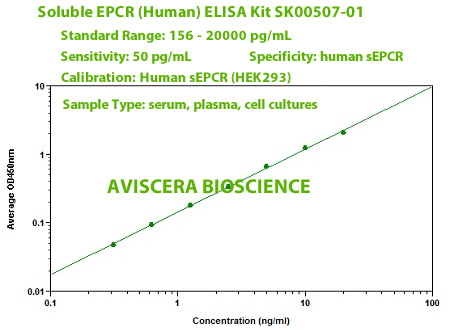
- Calibration: human sEPCR (HEK293)
- Assay Range: 156 - 20000 pg/mL
- Sensitivity: 50 pg/mL
- Sample Type: serum, Plasma
- Pretreatment: Yes
Citations:
Human Soluble Endothelial Cell Protein C Receptor ELISA Kit SK00507-01 had been used by Dr. Nicaise Tuikue Ndam on following research: High Plasma Levels of Soluble Endothelial Protein C Receptor Are Associated With Increased Mortality Among Children With Cerebral Malaria in Benin. The Journal of Infectious Diseases. 2015;211:1484–8.
New Research References:
- Song, H., Li, Q., Gui, X. et al. Endothelial protein C receptor promotes retinal neovascularization through heme catabolism. Nat Commun 16, 1603 (2025).
- Xue, M.; March, L. Endothelial Protein C Receptor: A Multifunctional Mediator in the Pathophysiology of Rheumatoid Arthritis. Cells 2025, 14, 485.
- Kondreddy, V., Keshava, S., Esmon, C.T. et al. A critical role of endothelial cell protein C receptor in the intestinal homeostasis in experimental colitis. Sci Rep 10, 20569 (2020).
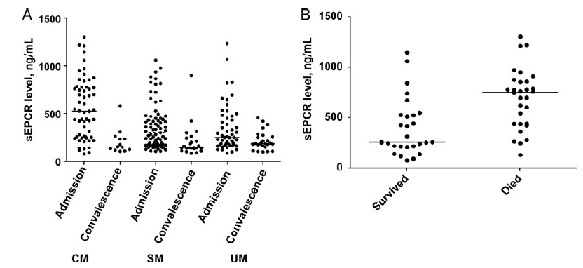 Plasma levels of soluble endothelial protein C receptor (sEPCR), according to malaria clinical form and outcome. Bars represent median values. A, sEPCR levels in plasma specimens obtained at admission and at convalescence in patients with malaria, including 58 and 14, respectively, with cerebral malaria (CM); 77 and 25, respectively severe noncerebral malaria (SM); and 53 and 27, respectively, with uncomplicated malaria (UM). At admission, patients with CM had higher sEPCR levels than patients with SM or UM (P = .0001). The SM and UM groups had similar sEPCR levels (P = .5). B, Plasma sEPCR levels at admission in children with CM who survived versus those who died. For children who died, the mean sEPCR level was higher than that for survivors (P = .0003).
|
|
|
 |
|
 |
|